
As an engineer and procurement manager in need of a custom rubber profile, you might be wondering:
- Is a sketch enough?
- Do they need a CAD file?
- What if they only have an old part with no drawing?
- What will tooling cost, and how long before they have something in their hands?
This article answers those questions directly. If you’re sourcing a custom extruded rubber profile – for the first time or as an experienced buyer switching suppliers – here’s exactly how we simplify the whole process at Walker Rubber.
Custom Profile vs Standard Profile: Which Do You Actually Need?
The starting point is working out whether you need a bespoke profile at all. Standard extruded profiles: P seals, D-seal, T-seals and bulb seals, and a range of hollow and solid sections cover a large proportion of sealing and edging applications.
A custom profile is the right choice when:
- A standard profile doesn't fit your door rebate, channel, or gap geometry.
- You need a specific compound that isn't available in an off-the-shelf profile: a specific hardness, specialist materials, or a food-grade or chemical-resistant formulation.
- You’re replacing a profile that was previously made to a bespoke drawing and has no standard equivalent.
- Your volumes are high enough that optimising the profile geometry will deliver meaningful savings in assembly time or material
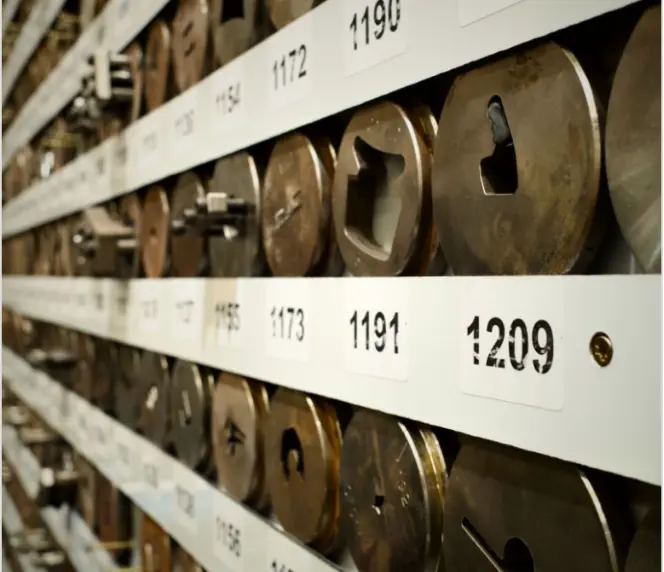
What a Die Is and What ‘In-House Tooling’ Means
Every extruded profile is produced by pushing uncured rubber compound through a shaped steel die. The die is machined to the exact cross-section of the finished profile, and once vulcanised, due to chemical changes within the rubber itself, it retains that shape.
At Walker Rubber, dies are designed and manufactured in-house, which matters for two reasons:
- Speed. There’s no external toolmaker to schedule around when in-house tooling is an option. Once a profile drawing is approved, die manufacture is handled internally, typically within two to three weeks. Then sample production can begin immediately.
- Control. If a die needs adjustment (because the sample shows a dimension that needs correcting or because your application requires a subtle profile change) we make the modification here rather than sending tooling out and waiting. Iteration is faster, and you only have one point of contact.
On cost: die tooling is a one-off cost. Once we’ve made it to your specification, it belongs to your project and is held for repeat production runs. For most applications, tooling costs are recovered quickly against the per-metre profile of the finished profile.
What Do You Need to Send Us?
The short answer is: send as much as you can. We work with all of the following:
A CAD drawing or DXF file
This is the best option. We can take a 2D profile cross-section drawing directly into die design. Tolerances can be specified on the drawing or agreed separately.
A physical sample
If you have an existing profile from a previous supplier, OEM part or a worn out component you need to replace, send it. We can measure the cross-section of the part on a specialised machine known as a keyence. We measure the cross-section, recreate the geometry, and produce a drawing for your approval before tooling begins. This is one of the most common routes for replacement profiles.
A description and application details
If you don't have a drawing or sample, we can work from your application requirements: gap width, closing force, operating temperature, exposure to any fats, greases, fuel or oil, UV etc. and any certification you might need, e.g. food-safe rubber. We’ll propose a profile geometry, draw it up, and discuss it with you before proceeding with samples and production.
Profile Samples: What the 72-Hour Turnaround Means in Practice
Once die tooling is complete, we produce an initial sample run for your approval before full production begins. Under normal conditions, sample profiles are ready within 72 hours of the die being finished.
What you receive is a short length of the finished profile, produced from the specified compound and cross-section. This is a production-representative sample, not a prototype: same die, same compound, same process as the final order.
Sample Approval
This is the stage where you confirm the profile meets your requirements. This usually involves:
- Checking cross-section dimensions against the agreed drawing
- Fitting the profile to your application to confirm it performs as expected - compression, recovery, fit in channel or rebate
- Confirming compound feel, hardness, and surface finish
If the sample is approved on your side, we proceed to full production. If a dimension needs adjustment or the profile requires modification, we update the die and produce a revised sample for you. Most projects are approved in the first or second sample.
Production Lead Times: As Little As 48 Hours for Make-to-Order
Once a profile is approved and the die is in-house,standard runs are typically dispatched within 10 days of order placement depending on volume. Your lead time will always be confirmed with you in your first quotation, so always use this as your guide. We also offer a rush-fee-based service giving you access to made-to-order extrusions in as little as 48 hours.
Factors that affect lead time:
- Compound availability: standard EPDM, Neoprene, Nitrile, and Natural Rubber compounds are all held on-site. Specialist compounds: fluorosilicone, food-grade formulations, highly filled compounds, may require additional sourcing and prep time.
- Order volume: very large orders (tens of thousands of metres) may require a scheduled production run. Our sales team will confirm lead time at the point of order.
- Finishing requirements: cut-to-length, coiling, or custom packaging adds times, most can be accommodated within the standard lead time window.
For applications with ongoing demand, we offer scheduled arrangements - tooling held in-house, production scheduled against agreed volumes and cadence.
Length Options: 1 Metre to 10,000 Metres
Custom extrusions are available in continuous lengths from one metre to ten thousand. There is no minimum order quantity on standard compounds once tooling is in place - this makes Walker Rubber a practical option for replacement or maintenance programmes, as well as high-volume production supply.
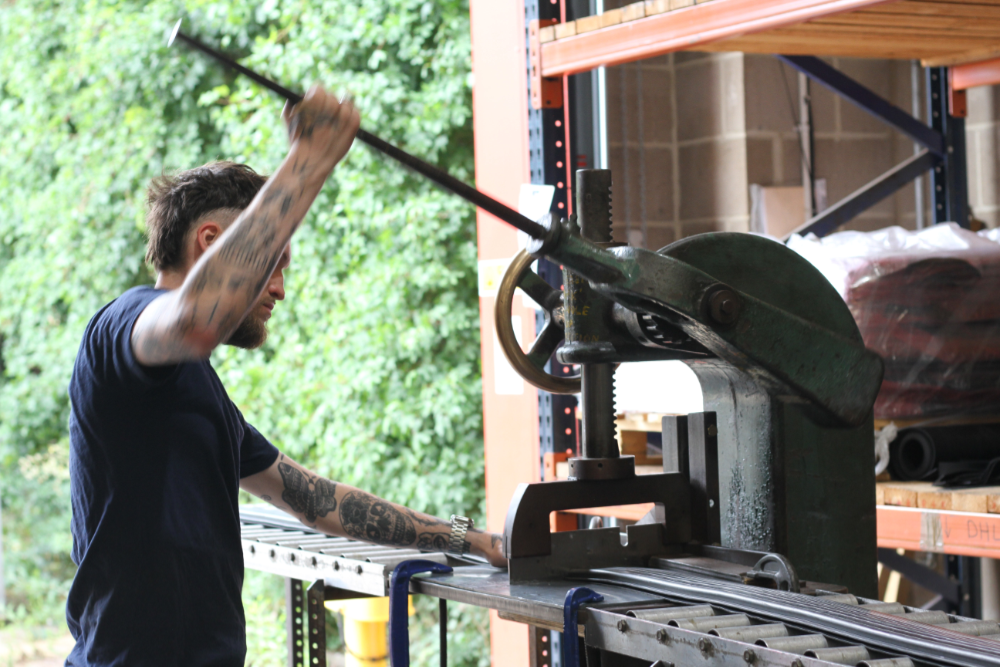
Cut-to-length
Carried out at dispatch where specified. If your application requires profiles cut to a fixed length, e.g. door seals for a fleet of vehicles, gaskets for a standard panel size. We cut and bundle to your requirement rather than supplying continuous coils. This reduces waste and handling time on your end.
For very small quantities (a handful of metres for a prototype or trial installation), contact us directly – we can usually accommodate short sample orders ahead of a larger production commitment.
Tolerances
Extruded rubber profiles are produced to dimensional tolerances that reflect the nature of the material and the extrusion process. Standard achievable tolerances for cross-section dimensions are typically 0.40mm to 3.20mm depending on profile complexity and dimensions
For a full guide to what is achievable and how tolerances are agreed, see our rubber extrusion tolerances article, including how compound, profile geometry, and production method affect dimensional consistency.
Extrusion Tolerances
Nominal Dimension (mm) | Tolerance, ± (mm) | |
Greater Than | Less Than or Equal To | |
0.00 | 1.50 | 0.40 |
1.50 | 2.50 | 0.50 |
2.50 | 4.00 | 0.70 |
4.00 | 6.30 | 0.80 |
6.30 | 10.00 | 1.00 |
10.00 | 16.00 | 1.30 |
16.00 | 25.00 | 1.60 |
25.00 | 40.00 | 2.00 |
40.00 | 63.00 | 2.50 |
63.00 | 100.00 | 3.20 |
100.00 | –––––– | 3.20 |
Ready to Enquire?
If you have a drawing, a sample or a description of what you need, the next step is straightforward: send it to us and we’ll come back with a quote. No obligation, no minimum order quantity requirements.